










SafeCare BC Logo
SafeCare BC Logo
Programs & Services

Programs and Services

View All
We are dedicated to providing comprehensive occupational health and safety (OHS) consulting services tailored to your needs.
View Service
Psychological health and safety, often called workplace mental health, encompasses principles and practices to foster a supportive, respectful, and psychologically safe work environment.
View Service
The Provincial Violence Prevention Curriculum is recognized as best-practice in violence prevention training for health care workers.
View Service
Get PSyched! - October 2025

Using “I” statements

Learn how to use "I" statements to manage your own stress response and reduce internal conflict, fostering a sense of calm during challenging discussions.

What are “I” statements?

“I” statements are a simple yet powerful tool for clear and respectful communication. They allow you to take ownership of your feelings and focus on your perspective of an experience. By framing your concerns around your feelings and needs, you avoid language that sounds like criticism, judgment, or accusations directed at others.

Crucially, "I" statements help regulate your body's nervous system, as they avoid activating your stress response. This helps reduce your internal conflict and encourages healthier and more positive interactions.

How to use “I” statements

The Formula

"I" statements generally follow a simple structure. They are focused on stating how a specific event or situation made you feel, and the request you would like to make. The key is to be specific. Examples of this formula include:

"I feel [emotion] when [specific behaviour or situation]  because [impact]. I need [specific request]."
"When [event] happens, I feel [emotion] because [impact]. I’d like [clear ask]."
The statement can include phrases like:
  • “I feel…”

  • “I notice…”

  • “I prefer…”

  • “I believe…”

  • “I would like…”

The power of "I" statements

Individual benefits

Reduced stress
They help regulate your body and prevent activating your stress response.
Improved emotional well-being
They allow you to identify and articulate your own feelings rather than reacting with blame.
Healthier relationships
"I" statements encourage healthier and more positive interactions with others.

Workplace benefits

Reduced conflict

"I" statements focus the conversation on the impact of a situation on you, rather than on the other person's character. This shift reduces the chance of  defensive reactions.

Stronger trust and collaboration

When staff communicate concerns from their own perspective, it demonstrates a commitment to resolving issues without blame. This promotes a workplace mindset of collaboration.

Improved staff well-being

By fostering positive interactions and reducing the stress of potential conflict, "I" statements directly support the emotional health and well-being of staff.

Connection to psychological health and safety

Effective and safe communication is critical to creating and maintaining a psychologically healthy and safe workplace. Since "I" statements reduce conflict and support trust, they are a powerful tool that directly links to the psychological and social support factor in the workplace, fostering a culture of civility and respect.

Strategies for using "I" statements

Use “I statements” properly

Simply starting with “I” and following it with a judgment or criticism is not effective. Be sure to focus on your emotions while avoiding hostility.

Ineffective: “I feel you are disrespectful.”

Effective: “I feel disrespected when my emails aren’t answered.”

Practice re-framing
The next time you want to start with “You are…,” try switching to:

•  I feel…”
• “I notice…”
• “I prefer…”
• “I believe…”
• “I would like…”
Pay attention to your body
Notice how your nervous system responds when you shift from an aggressive “You” statement to a regulated “I” statement. 

This shift is evidence of your nervous system regulating in real-time.
Using “I” statements

Featured Resources

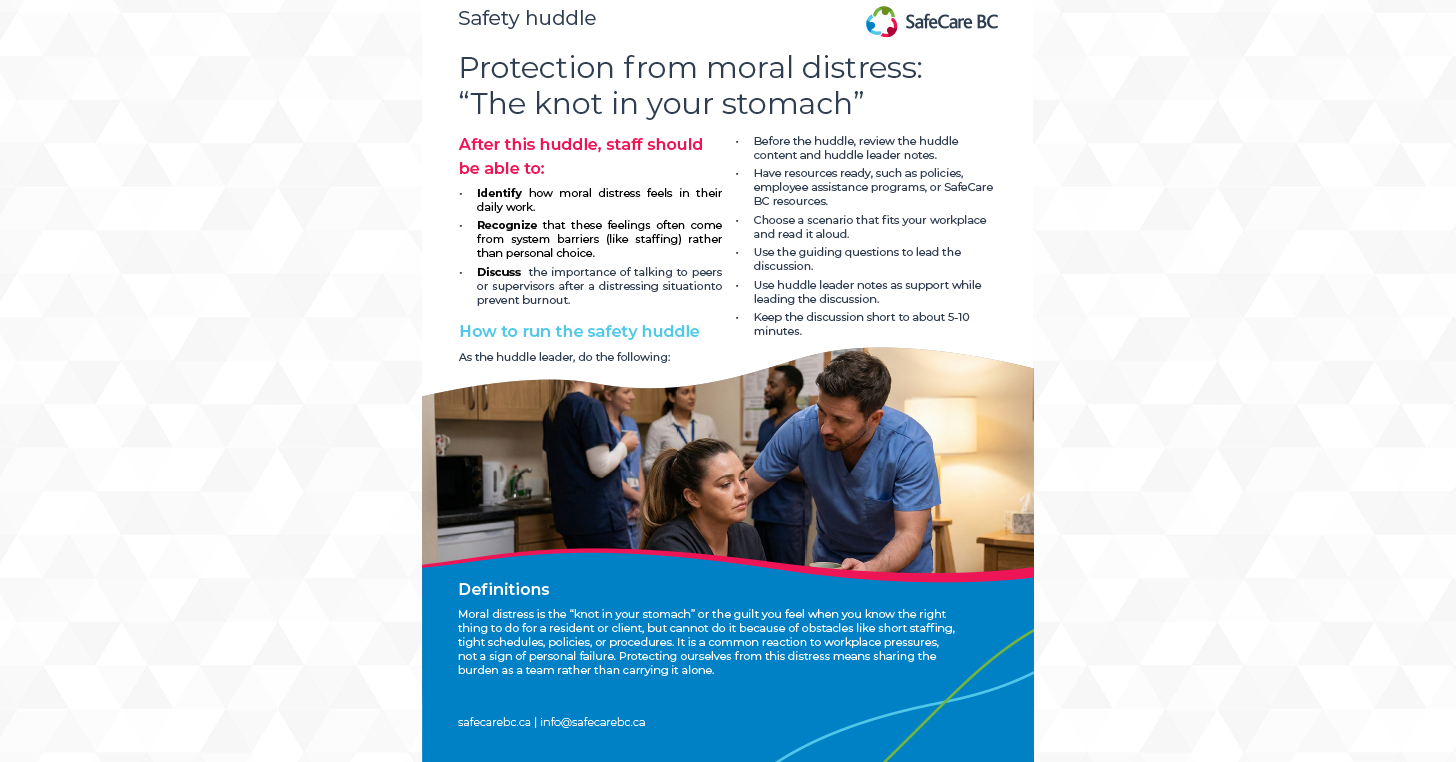
Strong communication is essential for a safe and respectful healthcare workplace. Learn how using “I” statements can reduce conflict, build trust, and support better teamwork during high-stress situations.
Files Attached
View Safety huddle
Filter

Using “I” statements resources

Resource Types

Resource Post Type Filter
  • Posts (32)
  • Safety Topics (31)
  • Webinars (20)
  • Safety Huddles (12)
  • Web links (11)
  • Assorted Resources (5)
  • Presentations (4)
  • Services (4)
  • Info Sheets (3)
  • Infographics (3)
  • Workshops (3)
  • Q&As (2)
  • Templates (2)
  • Videos (2)
  • Checklists (1)
  • Innovations (1)
  • People (1)
  • Posters (1)
  • Workshop Topics (1)

Audiences

Resources Audince Filter
  • All Audiences (95)
  • Managers and Supervisors (12)
  • Assisted and Independent Living (4)
  • All Audiences (2)
  • Home Care and Community Health Support (2)
  • Long-term Care (2)
Post

Brandi Heather on making space for play at Hearts & Hands 

Balance, Boundaries, Burnout, Civility and respect, Clear leadership, Collective Care, Communication, Emotional Intelligence, Empathy, Engagement, Grief, Growth and development, Harassment, Leadership, Mental Health, Moral distress, Organizational culture, Psychological Health and Safety, Resilience, Self-care, Self-talk, Stigma, Stress, Suicide, Trauma, Work-life balance

There’s a strange thing that happens when you become very good at holding everything together. People stop asking if you are okay.  You show up, do the work, care for the people who need you...

Webinar

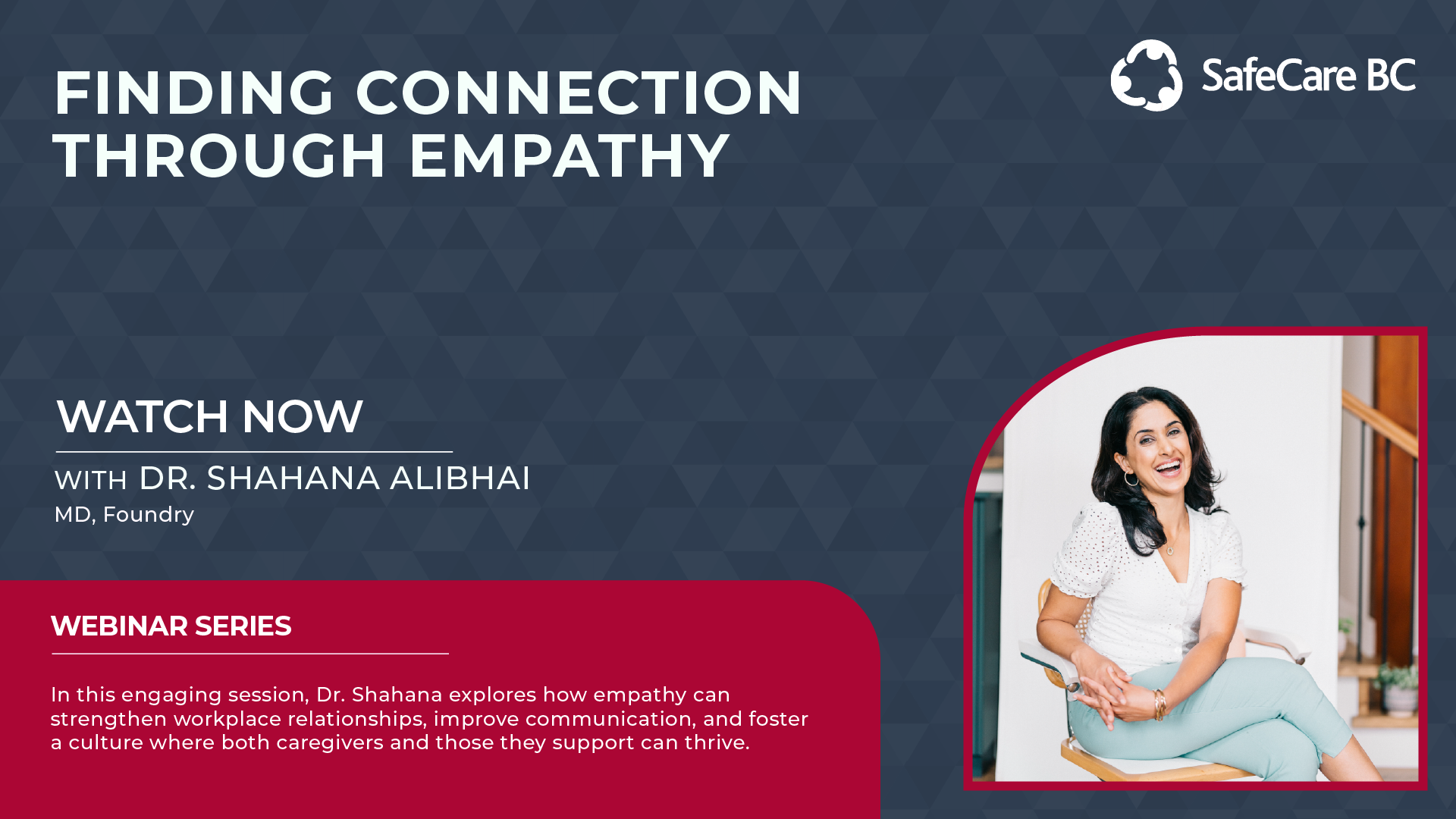
Finding connection through empathy

Civility and respect, Communication, Empathy

In this engaging session, Dr. Shahana explores how empathy can strengthen workplace relationships, improve communication, and foster a culture where both caregivers and those they support can thrive.

SafeCare BC Logo
©2026 SafeCare BC | All rights reserved.
To empower workplaces that provide care to create a culture of safety through evidence-based education, advocacy for safer workplaces, leadership, and collaboration
cross