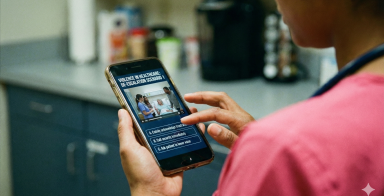
Ready to tackle violence prevention in healthcare? Discover our immersive, scenario-based training that identifies hidden risks and boosts your team's competency!
Psychological health and safety, often called workplace mental health, encompasses principles and practices to foster a supportive, respectful, and psychologically safe work environment.
Everything you need to know about the changes to WorkSafeBC's Occupational Health and Safety Regulation, Part 8, Personal Protective Clothing and Equipment — Respirators: Face Seal
MSI prevention is the focus of the 2026 WorkSafeBC inspection initiative. Learn how to protect long-term care staff and improve your safety outcomes today!
If work leaves you feeling humiliated or intimidated, that is a sign that something may be wrong. Let’s break down what bullying and harassment can look like, what they don't include, and what to do next so bullying doesn’t escalate.
When behaviour crosses the line: bullying and harassment in continuing care
People working in continuing care show up each day to support and care for others—and for one another. Everyone deserves a workplace that feels respectful and safe.
Bullying and harassment can quickly make work feel stressful and unsafe. It can also make it harder to speak up about hazards or concerns.
Let’s talk about what bullying and harassment are, what they are not, why they matter, and what to do next.
What bullying and harassment mean
WorkSafeBC defines workplace bullying and harassment as any inappropriate conduct or comment toward a worker that a person knew, or reasonably ought to have known, would cause the worker to feel humiliated or intimidated.
Bullying and harassment do not include reasonable actions taken by an employer or supervisor to manage and direct workers or the workplace.
In simple terms, the “line” is this:
Bullying and harassment leave someone feeling humiliated, ridiculed, or intimidated.
Reasonable work direction may be uncomfortable at times, but it is about the work and is part of managing a workplace.
What it can look like
Bullying and harassment are not always loud. Sometimes they are obvious, and at other times they appear as repeated behaviours.
Examples include:
verbal aggression or yelling
spreading rumours or gossip
calling someone derogatory names
exclusion or isolation
any inappropriate conduct or comment that would cause someone to feel humiliated, ridiculed, or intimidated
What does bullying and harassment not include?
It is normal to have different views at work. It is also normal to get feedback or direction. These do not count as bullying and harassment:
expressing a difference of opinion
constructive feedback, guidance, or advice about work-related behaviour
an employer or supervisor managing performance, taking disciplinary action, or assigning work
If you are unsure whether something “counts,” start with reporting. Use your organization’s reporting procedures to address concerns early.
If work leaves you feeling humiliated or intimidated, that is a sign that something may be wrong. Let’s break down what bullying and harassment can look like, what they don't include, and what to do next so bullying doesn’t escalate.
Why it matters
Bullying and harassment can affect your health, your confidence, and your safety at work.
Impacts on workers
Bullying and harassment can affect emotional and psychological health. It can lead to anxiety, fear, depression, emotional exhaustion, loss of confidence and professional self-worth, sleep disturbances, and chronic stress.
It can also affect physical health. It can contribute to headaches, muscle tension and pain, fatigue, and reduced immune function.
Bullying can increase the risk of injury. This can happen when someone is distracted, less focused, or avoiding certain tasks or people.
It can also affect job performance and confidence. People may withdraw from teamwork or communication, avoid speaking up, report fewer hazards, and make more errors.
Impacts on the workplace
Bullying and harassment can lead to:
more absenteeism and turnover
more workplace conflict and poor teamwork
decreased quality of care for clients and residents
a greater risk of incidents
decreased productivity
low morale and engagement
higher claim costs
Over time, bullying and harassment can start to feel “normal.” This can lead to underreporting or delayed reporting.
It can also create fear about reporting. This can include fear of reporting bullying and harassment, hazards, injuries and illnesses, near-misses, medical concerns, and other health and safety concerns. When people are afraid to report, safety culture suffers.
What to do if you’ve experienced bullying
If you experience bullying or harassment at work, report it using your organization’s reporting procedure.
Reporting early matters. Timely reporting and investigation can:
prevent the situation from escalating
reduce harm to the worker
reduce impacts in the workplace
help prevent it from happening again
support a safe and respectful environment
What to remember
Bullying and harassment is not “part of the job.” It can harm people and workplaces. If it happens, you do not have to deal with it alone. Report it using your organization’s process so it can be addressed early and respectfully.
Bullying and harassment at work include inappropriate conduct or comments that a person knew, or should have known, would humiliate or intimidate a worker.
Yelling is considered a form of verbal bullying and emotional abuse when it is used to intimidate, control, demean, or frighten someone.
Constructive feedback, guidance, or advice about work-related behaviour is not considered bullying or harassment.
Reasonable actions by an employer or supervisor related to managing performance, discipline, or assigning work are not included.
Timely reporting and investigation can prevent escalation, reduce harm, prevent re-occurrences, and support a safe and respectful environment.
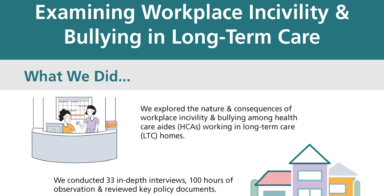
We explored the nature and severity of workplace bullying amongst care aides working in long-term care homes. Explore the infographic to see what we learned.
Balance, Boundaries, Burnout, Civility and respect, Clear leadership, Collective Care, Communication, Emotional Intelligence, Empathy, Engagement, Grief, Growth and development, Harassment, Leadership, Mental Health, Moral distress, Organizational culture, Psychological Health and Safety, Resilience, Self-care, Self-talk, Stigma, Stress, Suicide, Trauma, Work-life balance
There’s a strange thing that happens when you become very good at holding everything together. People stop asking if you are okay. You show up, do the work, care for the people who need you...
We all play a part in preventing bullying and harassment in the workplace. Whether you're a leader or a front-line worker, you can help build a civil workplace culture.
Boundaries, Bullying, Burnout, Civility and respect, Emotional Intelligence, Growth and development, incivility, Mental Health, Moral distress, Organizational culture, Psychological demands, Psychological Health and Safety, Psychological injuries, Psychological self-care, Psychological social support, Resilience, Self-care, Self-talk, Stigma
It often starts small. A co-worker cuts you off during a report. Someone ignores your “good morning.” A team member sends a blunt message with no context. It’s not as obvious as yelling or name-calling,...
Bullying, Civility and respect, incivility, Mental Health, Psychological Health and Safety
Dedicated to providing the best care in BC's long-term care or home health sectors, but find yourself navigating the daily drain of workplace incivility? Those seemingly small acts – such as eye-rolling, hushed gossip, or...
The BC Human Rights Code prohibits discrimination and harassment based on various protected characteristics, such as race, gender, sexual orientation, disability, and more.
Bullying, Equity and diversity and inclusion (EDI), Mental Health, Psychological Health and Safety
Having safe, healthy, and inclusive workplaces should be a basic goal for all employers. However, many workers view their workplace as being very unhealthy or even toxic. So why is there a disconnect between this...
This website is an online platform of free online mental health resources and webinars designed for healthcare workers. Created in a partnership by SafeCare BC, the Canadian Mental Health Association BC Division, and the Ministry...
The bullying and harassment resource tool kit helps employers and workers to understand their legal duties, and to prevent and address bullying and harassment in the workplace.
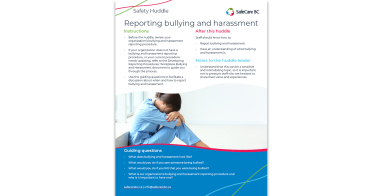
This document contains a step-by-step guide for developing reporting procedures for workplace bullying and harassment, as well as sample procedures and a sample complaint form.
Stay up to date
Subscribe to our newsletter and stay up to date with all of SafeCare BC’s latest news.
To empower workplaces that provide care to create a culture of safety through evidence-based education, advocacy for safer workplaces, leadership, and collaboration
Stay up to date
Subscribe to our newsletter and stay up to date with all of SafeCare BC’s latest news.