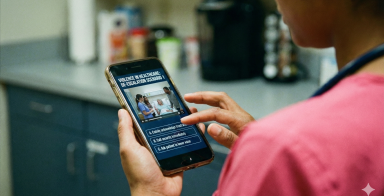
Ready to tackle violence prevention in healthcare? Discover our immersive, scenario-based training that identifies hidden risks and boosts your team's competency!
Psychological health and safety, often called workplace mental health, encompasses principles and practices to foster a supportive, respectful, and psychologically safe work environment.
Everything you need to know about the changes to WorkSafeBC's Occupational Health and Safety Regulation, Part 8, Personal Protective Clothing and Equipment — Respirators: Face Seal
MSI prevention is the focus of the 2026 WorkSafeBC inspection initiative. Learn how to protect long-term care staff and improve your safety outcomes today!
Creating inclusion means paying attention to what people experience in the workplace. It means making room for different ways of communicating, participating, connecting, and contributing.
Workplaces bring together people with different cultures, languages, identities, backgrounds, experiences, and ways of thinking. These differences can bring valuable perspectives, knowledge, and approaches to work. They can also create misunderstandings or barriers when workplace norms, communication, or relationships make it easier for some people than others to take part.
Creating inclusion means paying attention to what people experience in the workplace. It means making room for different ways of communicating, participating, connecting, and contributing.
What is workplace diversity?
Diversity refers to the similarities and differences among people in a workplace. It can include culture, race, ethnicity, language, gender, age, sexual orientation, ability, education, professional background, and life experiences. It also includes less visible differences, such as knowledge, communication styles, ways of thinking, and perspectives.
These differences can bring different knowledge, perspectives, and approaches to the work. They can also lead to misunderstandings or barriers when people have different communication styles, expectations, cultural norms, or ways of interacting.
The goal is not simply to have a diverse workplace. It is to create a workplace where diversity is supported and valued.
Diversity does not automatically create inclusion
A workplace can be diverse without being inclusive. People with different backgrounds may work together, but workplace norms, practices, or everyday interactions may still make it easier for some people than others to participate, connect, contribute, and belong.
Diversity is about who is in the workplace.
Inclusion is about what people experience once they are there.
In an inclusive workplace, people have meaningful opportunities to:
participate and contribute their ideas and perspectives;
build relationships;
access information, speak up, and ask questions; and
be respected and valued and feel that they belong.
Instead of asking only, "Do we have a diverse workplace?" we can also ask:
Who gets to participate?
Who feels comfortable contributing?
Whose perspectives tend to be heard?
Who may find it harder to enter the conversation?
Who has opportunities to build relationships?
Who feels like they belong?
Inclusion helps create belonging
Belonging can mean feeling accepted as part of a workplace or group, feeling valued for what you contribute, and being able to participate without having to become more like everyone else.
There is an important difference between belonging and fitting in. Fitting in can mean adapting ourselves to established norms or expectations to be accepted. Belonging allows people to be part of the group while retaining the differences that make them who they are.
Inclusion is not about eliminating differences or expecting everyone to interact in the same way. It is about making room for differences within the workplace.
Similarities can help us connect and can also create boundaries
People naturally connect over shared language, culture, age, experiences, interests, roles, humour, and other similarities. These connections are not inherently a problem. They can offer friendship, belonging, cultural connection, understanding, and social support.
At the same time, what helps one person feel that they belong can sometimes leave another person feeling outside the group. This can happen during ordinary workplace interactions, even when no one intends to exclude anyone.
It might look like:
Coworkers bonding through a shared language or regularly spending breaks with others who have similar backgrounds;
Long-term employees talking about people or events that newer employees do not know, or a group using cultural references or humour that others do not understand;
People using workplace jargon, acronyms, idioms, or expressions that are unfamiliar to others;
A conversation moving so quickly that someone who needs more time to formulate their thoughts cannot enter it; or
The same people speaking first or most often in meetings, making it harder for others to contribute.
Inclusion asks us to notice not only whether we feel included, but also whether others may be having a different experience.
Everyday ways to create inclusion
Inclusion is shaped through workplace practices, established relationships, and everyday interactions. Small adjustments can make it easier for more people to understand what is happening, join in, and contribute.
Make it easier to join in
Notice when someone is outside a conversation or activity and create an opening for them. Do not assume everyone will naturally find their way into established workplace relationships or groups.
Make it easier to understand
Explain acronyms, jargon, idioms, cultural references, and workplace-specific expressions instead of assuming everyone understands them.
Make space before filling it
Not everyone processes information or enters a conversation at the same speed. Give people time to formulate their thoughts before moving on.
Check your interpretation
Before assigning meaning to someone's behaviour based on your own expectations, consider whether another explanation is possible.
Be curious, respectfully
Remain open to experiences and perspectives that differ from your own. At the same time, do not expect a coworker to represent or educate you about an entire culture or identity.
Think about impact as well as intent
Exclusion is not always intentional. If you learn that something you did left someone out, be willing to listen and adjust.
Do not mistake sameness for fairness
People do not necessarily need to communicate, interact, participate, or receive information in the same way to contribute effectively.
Look beyond the usual voices
Notice whether the same people tend to contribute. Create meaningful opportunities for others to take part, ask questions, and share their perspectives.
Make connection intentional
Pay attention to who may be outside established relationships, activities, or conversations. We naturally recognize when we feel excluded. Inclusion also asks us to notice who else may not be part of the conversation.
Questions to reflect on as a team
Who may find it easy to join conversations or activities in our workplace? Who may find it harder?
Are acronyms, jargon, humour, or cultural references creating barriers to understanding?
Do people have different ways to ask questions, share ideas, or take part?
Are the same voices heard most often?
What could we change to make participation, information, and workplace relationships more accessible?
Creating inclusion does not mean expecting everyone to be the same. It means noticing how people experience the workplace and making thoughtful changes so more people can participate, contribute, connect, and belong.
Workplace diversity refers to the similarities and differences among people in a workplace. These can include culture, race, ethnicity, language, gender, age, sexual orientation, ability, education, professional background, life experiences, communication styles, knowledge, and perspectives.
Workplace inclusion means creating conditions where people have meaningful opportunities to participate, contribute their ideas and perspectives, build relationships, access information, speak up, ask questions, be respected and valued, and feel that they belong.
Diversity is about who is in the workplace. Inclusion is about what people experience once they are there, including whether they have meaningful opportunities to participate, contribute, access information, build relationships, speak up, and feel valued.
No. A workplace can include people with many different identities, backgrounds, and experiences while its norms, practices, or everyday interactions still create barriers for some people. Inclusion requires attention to how people participate, connect, contribute, and belong.
Fitting in can mean adapting to established norms or expectations to be accepted. Belonging means being accepted as part of the workplace while retaining the differences that make you who you are.
Yes. Everyday interactions can leave someone outside a group even when exclusion was not intended. Shared language, humour, workplace history, jargon, fast-moving conversations, or established social groups can all make it harder for someone to join in or understand what is happening.
They can create openings for others to join in, explain unfamiliar language, allow more time for people to respond, check their interpretations, listen when an action has had an excluding impact, and create different ways for people to ask questions and contribute.
Filter
Creating inclusion in diverse workplaces resources
Balance, Boundaries, Burnout, Civility and respect, Clear leadership, Collective Care, Communication, Emotional Intelligence, Empathy, Engagement, Grief, Growth and development, Harassment, Leadership, Mental Health, Moral distress, Organizational culture, Psychological Health and Safety, Resilience, Self-care, Self-talk, Stigma, Stress, Suicide, Trauma, Work-life balance
There’s a strange thing that happens when you become very good at holding everything together. People stop asking if you are okay. You show up, do the work, care for the people who need you...
Everything you need to know about the changes to WorkSafeBC's Occupational Health and Safety Regulation, Part 8, Personal Protective Clothing and Equipment — Respirators: Face Seal
For Jo Sedman, health and safety has always started with people. Long before she stepped into leadership roles, before policy development, safety huddles, and education planning became part of her everyday work, she remembers being...
We are sharing a compliance reminder from WorkSafeBC With the recent job action by the BC Nurses Union, WorkSafeBC has become aware that some employers have noted they will not be able to participate in occupational...
The Provincial Infection Control Network of BC has released an updated Provincial Guidance on Return to Work and Exposure Management for Health-Care Workers with Viral Respiratory Illness(VRI). While the June 2026 update does not introduce...
WorkSafeBC is proposing a change to how it corrects employer classifications when information was missing or incorrect, but there was no intent to mislead. They want to create a new category called “Firm Non-Compliance” for...
The cost of poor workplace health and safety is not just increased WorkSafe premiums. It leads to staffing challenges, increased overtime, inconsistent care delivery, and more.
Emergencies can happen with little or no warning. That's why Rosemary Dunne of the Broadway Group wanted to be prepared for the unexpected. Her level of detail and commitment to creating a strong emergency plan...
The results of our 2026 member survey are in, and your feedback made it clear where support is needed most. Alongside key health and safety concerns, such as fatigue, mental health and well-being, and dementia-related...
Balance, Boundaries, Burnout, Civility and respect, Clear leadership, Communication, Communication, Empathy, Engagement, Growth and development, Leadership, Mental Health, Motivational Interviewing, Organizational culture, Psychological Health and Safety, Psychological protection, Psychological self-care, Psychological social support, Recognition and reward, Self-care, Self-talk, Work-life balance
It didn’t start with leadership. Karen Tasker’s journey at Sienna Senior Living’s Lakeview Lodge Community, in West Kelowna, began in 2013, when she returned to the workforce after 14 years as a stay-at-home mom. Her...
Stay up to date
Subscribe to our newsletter and stay up to date with all of SafeCare BC’s latest news.
To empower workplaces that provide care to create a culture of safety through evidence-based education, advocacy for safer workplaces, leadership, and collaboration
Stay up to date
Subscribe to our newsletter and stay up to date with all of SafeCare BC’s latest news.